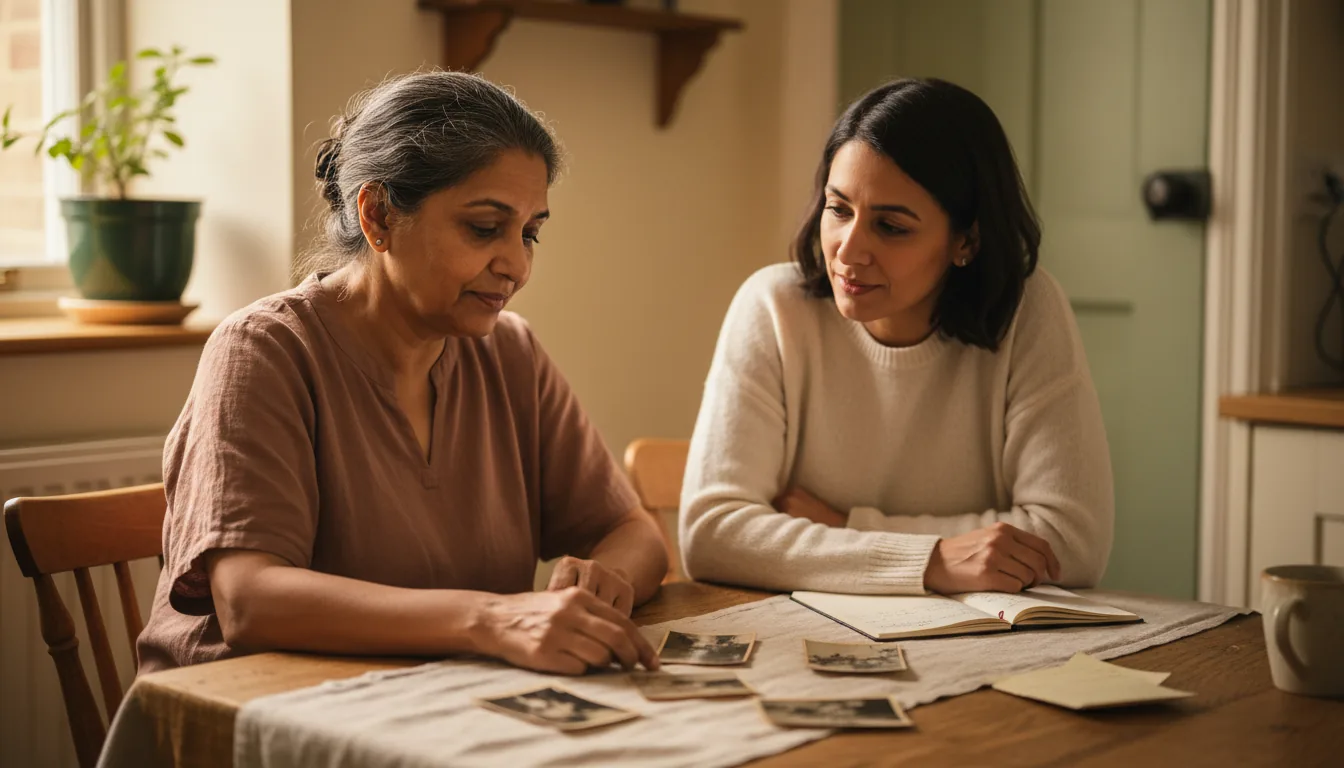
 A memory book for someone with dementia is a record of who they are – photographs,
stories, places, names, and moments that together tell the shape of a life. In care
settings it helps staff understand the person in front of them, beyond the diagnosis.
At home it gives families a way to stay connected across the distance dementia creates.
But it serves a third purpose, one that matters most while someone still has words: it
is a way of capturing their story while they can still help tell it. If someone you love
has a dementia diagnosis – or you are watching the early signs and wondering what to do –
starting a memory book now, while they can still contribute, is one of the most
meaningful things you can do.
A memory book for someone with dementia is a record of who they are – photographs,
stories, places, names, and moments that together tell the shape of a life. In care
settings it helps staff understand the person in front of them, beyond the diagnosis.
At home it gives families a way to stay connected across the distance dementia creates.
But it serves a third purpose, one that matters most while someone still has words: it
is a way of capturing their story while they can still help tell it. If someone you love
has a dementia diagnosis – or you are watching the early signs and wondering what to do –
starting a memory book now, while they can still contribute, is one of the most
meaningful things you can do.
In brief
- A memory book (also called a life story book) is a personal record used in dementia care to preserve identity and help carers understand the person, not just the condition
- Long-term memories tend to be more resilient than short-term ones in many forms of dementia – there is usually more to capture than families expect
- Starting while someone can still contribute produces richer, more personal material than reconstructing the story afterwards
- Short, relaxed conversations work better than long structured interviews – twenty minutes with the right question is worth an hour of pressure
- When someone can no longer narrate their own story, family members can build the book from what they collectively know
- The finished book outlasts the care setting and becomes a lasting record for the whole family
Why a life story book matters in dementia care
Long-term memory tends to be more resilient than short-term memory in many forms of dementia. Someone who cannot remember what they had for breakfast may speak fluently about their first job, the town they grew up in, or the way their mother made Sunday dinner. Life story work – the practice of gathering and recording those memories – draws on that resilience deliberately. In care settings, a memory book means a new care worker who has never met your father can sit with him and ask about the photograph on page three – the factory where he worked for twenty years, or the football team he played for in his thirties. It gives everyone who cares for him something real to ask about. Research in dementia care has found that life story work can reduce anxiety and agitation, support a stronger sense of identity, and improve the quality of interactions between residents and staff. It does not slow the condition. But it can make the time that remains better – for the person, and for the people around them.
How to start while they can still contribute
The most common mistake is waiting. Families assume they need to be organised first, or have the right equipment, or set aside a whole afternoon. They don't. A single good conversation – recorded on a phone, or simply noted down afterwards – is worth starting with today. Keep the sessions short and conversational. Twenty minutes of relaxed talking produces far richer material than an hour of interview-style questions. Begin with something that carries no pressure: a place they loved, a person from their past, a memory with a sensory detail attached. "What did your grandmother's kitchen smell like?" tends to open more doors than "Tell me about your childhood." Some questions that tend to work well in these early conversations:
- Where did you grow up, and what do you remember most about it?
- What did you want to be when you were young?
- Who was the most important person in your life before you had children?
- What was the best year of your life, and what made it that?
- What do you want us to remember about you? That last question, asked gently and without pressure, often produces the answer that matters most. For a fuller guide to the questions most worth asking before the window begins to close, this post on recording a parent's life story covers how to make these conversations feel natural rather than like an interview.
What to include in a memory book for dementia
A useful memory book goes beyond a photograph album with captions. The goal is to capture the texture of a life – not just the facts of it. Organise it around the shape of a person's story rather than a strict timeline: childhood and where they came from; school, early friendships, and first love; work and what they were proud of; family – the people and the stories that defined it; the things that made them who they are. Not every section needs to be long. A single paragraph about how they met their husband, written in their own words or close to them, is more valuable than a carefully formatted list of dates. Include photographs wherever you have them – and write the story behind each one rather than leaving it to speak for itself. Photographs without context become mysteries within a generation. "This is Mum at twenty-two, on the day she got the job she had always wanted" is a fact that can outlast the person who remembers it.
When someone can no longer narrate their own story
Not every family gets to start early. Sometimes a diagnosis arrives late, or the person is already past the point of being able to sit and talk at length. That does not mean the book cannot be made. Family members hold more of someone's story than they usually realise. A sibling who grew up in the same house. A best friend from forty years back. A cousin who was present at moments the immediate family never witnessed. A memory book built from those testimonies – from photographs, letters, the accounts of people who knew them well – is not a second-best version. It is still a record. It still means the care worker sitting with your mother on a Tuesday afternoon has something true to ask her about, something that connects to who she actually was. As we explored in The Stories We Risk Losing, the details that make a person specific – the knowledge that distinguishes them from anyone else who ever lived – are more fragile than they look. A memory book is one of the most direct ways of making them less so.
Common questions about memory books and dementia
Can I make a memory book if my relative is already in the middle stages? Yes. The middle stages of dementia often still carry a great deal of accessible long-term memory. You may need to adjust your approach – shorter sessions, more visual prompts, a familiar and quiet setting – but the material is frequently there. Even in the later stages, family members can build the book from what they collectively know. Do I need special equipment or software? No. A phone recording, a printed photograph, and a notebook are enough to start. What matters is capturing the material while it is there – the format can always be refined later. Will a care home actually use it? Most care homes welcome life story books and will use them in daily care. It is worth speaking to the person's key worker when you bring it in – a short conversation about the most important details will help them use the book well.
Starting now
A memory book does not need to be finished to be useful. A single session, a handful of photographs, a page of notes – this is already more than most families have. What matters is starting before the window closes further. Chronicle was built for exactly this kind of work: guided conversations that draw out the stories a person carries, shaped into something lasting. If someone you love has a dementia diagnosis, or you can feel that window beginning to narrow, a guided memoir can capture what is there now in a way that a photograph album or a notebook rarely manages. The process does not require your relative to remember everything. It requires only that they begin – and that someone who loves them begins with them. Begin their story →